

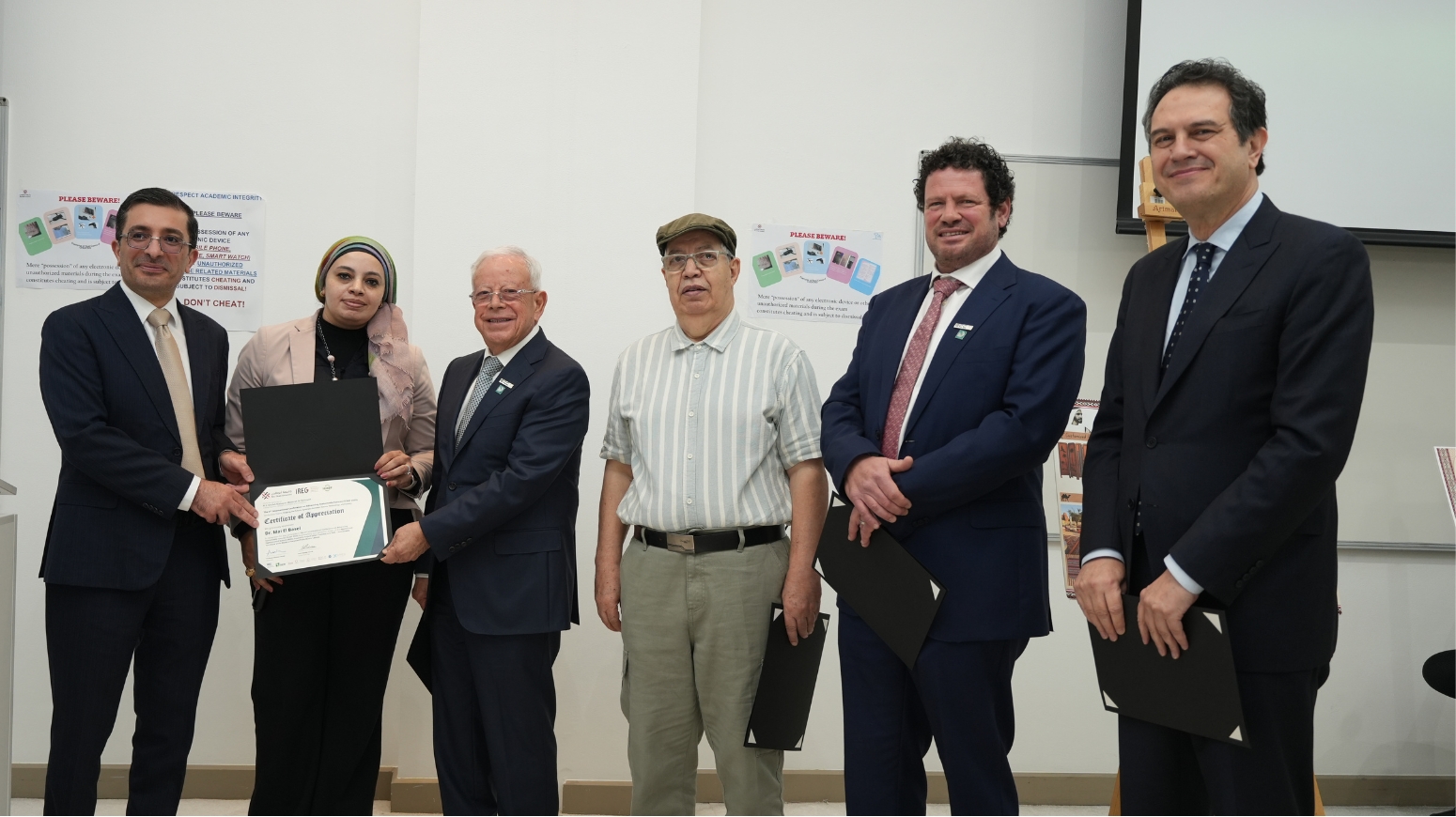
The DesertBoard team recently engaged with Abu Dhabi University to celebrate the creativity, innovation, and dedication of aspiring interior design students, honoring their exceptional work with certificates of appreciation. This initiative, hosted by the Office of Research and Sponsored Programs at Abu Dhabi University under the leadership of Prof. Montasir Qasymeh and Prof. Hamdi Mustafa Sheibani, Dean of the College of Engineering, underscores the growing importance of sustainable materials and design practices in the UAE.
As part of this collaborative effort, Interior Design students—mentored by Dr. Mai Elbasel, Prof. Osama Ahmed Mohamed, Ph.D., P.E., M.ASCE, and Prof. Omar Chaalal—undertook forward-thinking projects utilizing DesertBoard’s innovative Palm Strand Boards (PSB®). These sustainable wooden boards, engineered from pruned palm fronds, offered students a hands-on, project-based learning opportunity that bridged theoretical knowledge with practical application, highlighting the role of eco-friendly materials in shaping contemporary interior and architectural design.
As a primary manufacturer of engineered wooden boards in the region, DesertBoard represents more than a material supplier — it serves as a foundational pillar for regional economic resilience and supply chain security. By manufacturing locally, DesertBoard strengthens the UAE’s industrial ecosystem, reducing dependency on imports while supporting national strategies for economic diversification and sustainable industrialization. Its role extends beyond product innovation; it enables entire downstream industries to flourish — from parquet flooring and door manufacturing to I-beam production, SIP systems, and bespoke joinery enterprises. In doing so, DesertBoard contributes directly to the region’s industrial growth and long-term economic security.
The students’ projects were further showcased at the 3rd International Conference on Advancing Sustainable Futures (ICASF 2025) in a dedicated exhibition, where their work stood alongside leading research initiatives in sustainability. This recognition not only emphasized the students’ ingenuity but also demonstrated the versatility and applicability of PSB® wooden boards across various sectors including interior design, architecture, healthcare, culture, heritage-driven projects, and advanced manufacturing.


“Collaborations like these are vital to fostering a new generation of designers who prioritize sustainability without compromising on creativity,” said Kamal Farah, Director at DesertBoard. “As a primary manufacturer in the region, we see it as our responsibility to provide materials that not only meet design aspirations but also reinforce supply chain stability, economic strength, and environmental stewardship. By providing PSB® wooden boards, we enable students and professionals alike to explore innovative, environmentally conscious solutions that can be scaled for real-world applications.”
This partnership aligns seamlessly with Abu Dhabi’s sustainability framework, Estidama, which promotes environmentally responsible building and community development. It also reflects the broader environmental objectives championed by entities such as the Environment Agency –
Abu Dhabi and Dubai Municipality. By supporting students in employing sustainable materials, DesertBoard demonstrates the tangible benefits of eco-friendly construction practices — from reducing environmental impact to enhancing material efficiency and aesthetic versatility.
Furthermore, DesertBoard’s manufacturing model directly supports the UAE’s Net Zero ambitions by transforming agricultural byproduct into high-performance engineered wooden boards, minimizing resource depletion while promoting circular economy principles. By combining industry expertise with academic rigor, DesertBoard and Abu Dhabi University exemplify how industry–academia collaborations can drive innovation, advance sustainable practices, strengthen industrial foundations, and enhance community wellbeing across the UAE.
DesertBoard continues to lead the charge in sustainable construction materials, positioning Palm Strand Boards as an effective, eco-conscious alternative for a wide range of applications — from interiors to large-scale architectural projects — empowering both professionals and students to build responsibly while reinforcing the region’s path toward industrial strength and environmental sustainability.


